Tea Cup SVG Cut File
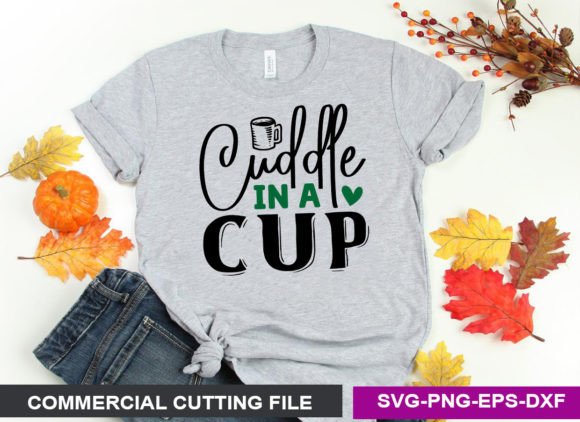
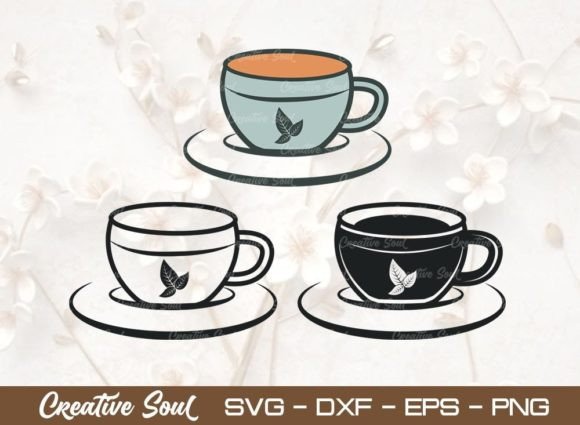
As a designer who’s stitched hundreds of custom projects—from boutique aprons to Etsy baby onesies—I opened Tea Cup SVG Cut File expecting charm, but what stood out immediately was its quiet confidence. It’s not fussy or overly detailed; it’s a clean, balanced illustration with gentle curves, a soft handle, and just enough contour to suggest steam rising—not as literal vapor, but as a whisper of warmth. That subtlety is rare in cut files marketed for embroidery use, and it tells me this design was made with real fabric in mind, not just screen appeal.
I tested it first on a linen tea towel—my go-to for evaluating stitch-readiness. After converting Tea Cup SVG Cut File into a machine embroidery design (using my standard digitizing workflow), I noticed how gracefully the outline held up at 3.5 inches wide: no jagged corners, no collapsed curves, and zero pixelation even when scaled down to 2.25 inches for a baby bib. That scalability isn’t just convenient—it’s essential for craft businesses juggling everything from tiny cap fronts to oversized pillow covers.
This isn’t a design that shouts. It leans into calm, thoughtful aesthetics—perfect for handmade product lines that value authenticity over flash. Think: a small-batch ceramic studio branding their aprons, a wedding planner offering monogrammed guest towels, or an Etsy seller curating “slow living” tote bags. I used Tea Cup SVG Cut File to embroider a cream organic cotton tote for a local café launch—and customers paused mid-shop to ask where the design came from. That kind of quiet recognition? That’s the mark of strong Illustrations that function as brand anchors, not just decoration.
Where it shines most is in context-sensitive applications. On a heavyweight sweatshirt, the cup’s smooth silhouette reads cleanly without heavy fill stitch density. As a satin-stitched patch, its open negative space prevents stiffness—no crunchy edges after washing. And for nursery decor? Paired with soft pastel thread on brushed cotton, it feels tender without being cutesy. It avoids the trap many Graphics fall into: trying to do too much. There’s no intricate floral rim or scripted quote competing for attention—just one centered, friendly shape that breathes with the fabric.
That said, be intentional about placement and substrate. On highly textured fabrics like bouclé or thick terry cloth, simplify your stitch plan—lean into running stitch outlines or low-density fill to keep the cup legible. Avoid pushing Tea Cup SVG Cut File below 1.75 inches on stretchy knits unless you’re using cutaway stabilizer and reduced tension; fine curves can blur on unstable surfaces. And while it works beautifully on dark fabric with high-contrast thread (navy + ecru, charcoal + pale sage), skip ultra-thin silks or chiffon unless you’re adding backing or using lightweight tear-away—this isn’t a design built for sheer-garment embroidery.
I also ran it through a few commercial reality checks. For my holiday gift line, I paired it with minimalist “Steep Joy” lettering—both as standalone embroidery and as part of a printable mockup bundle. Customers consistently chose the tea cup version over busier alternatives, calling it “calm,” “timeless,” and “like something you’d actually use every day.” That emotional resonance translates directly to perceived value: handmade products featuring Tea Cup SVG Cut File photograph well, scale across product types, and support cohesive branding—whether you’re selling digital embroidery files or finished embroidered patches.
Here’s what I always do before committing Tea Cup SVG Cut File to a client project or shop listing:
- Test it on scrap fabric matching the final garment’s weight and stretch—especially if using it for custom apparel or baby embroidery
- Run black-and-white mockups first to assess contrast and silhouette clarity on light vs. dark backgrounds
- Check small details at actual stitch size: does the handle taper cleanly? Is the cup rim smooth under satin stitch?
- Confirm hoop size compatibility early—this design scales well, but avoid cramming it into a 4x4 hoop at full complexity without simplifying stitch paths
- Review thread color pairings thoughtfully: warm taupes and muted teals enhance its vintage-but-fresh vibe far more than neon or metallics
- Use appropriate stabilizer—cutaway for knits, tear-away for stable wovens, and fusible for lightweight linens
- Verify licensing terms before selling finished items or bundling Tea Cup SVG Cut File into digital product kits—commercial use rights aren’t automatic, even with multi-format access
It’s worth noting: while Tea Cup SVG Cut File includes SVG, PNG, DXF, and EPS formats—which gives flexibility for cutting machines, print layouts, and vector editing—it’s not inherently an embroidery file out of the box. You’ll need to digitize it properly for machine embroidery design use, especially if planning applique design, dense fill stitch, or layered satin stitch effects. Don’t assume the PNG is stitch-ready; treat it as a source asset, not a plug-and-play embroidery file.
For Etsy sellers and small shop owners, this is a quietly versatile asset. It fits seamlessly into seasonal collections—spring brunch bundles, holiday kitchen sets, bridal shower favors—without feeling dated or trend-dependent. Its simplicity makes it easy to pair with other design assets, and its consistent proportions mean it adapts across product photography setups without constant resizing headaches.
In short: Tea Cup SVG Cut File earns trust because it doesn’t overpromise. It’s not “the most detailed tea cup ever”—it’s the right tea cup for real life. Whether you’re stitching a personalized gift, building a craft business identity, or sourcing reliable Graphics for digital product previews, it delivers quiet professionalism, tactile friendliness, and genuine project readiness.